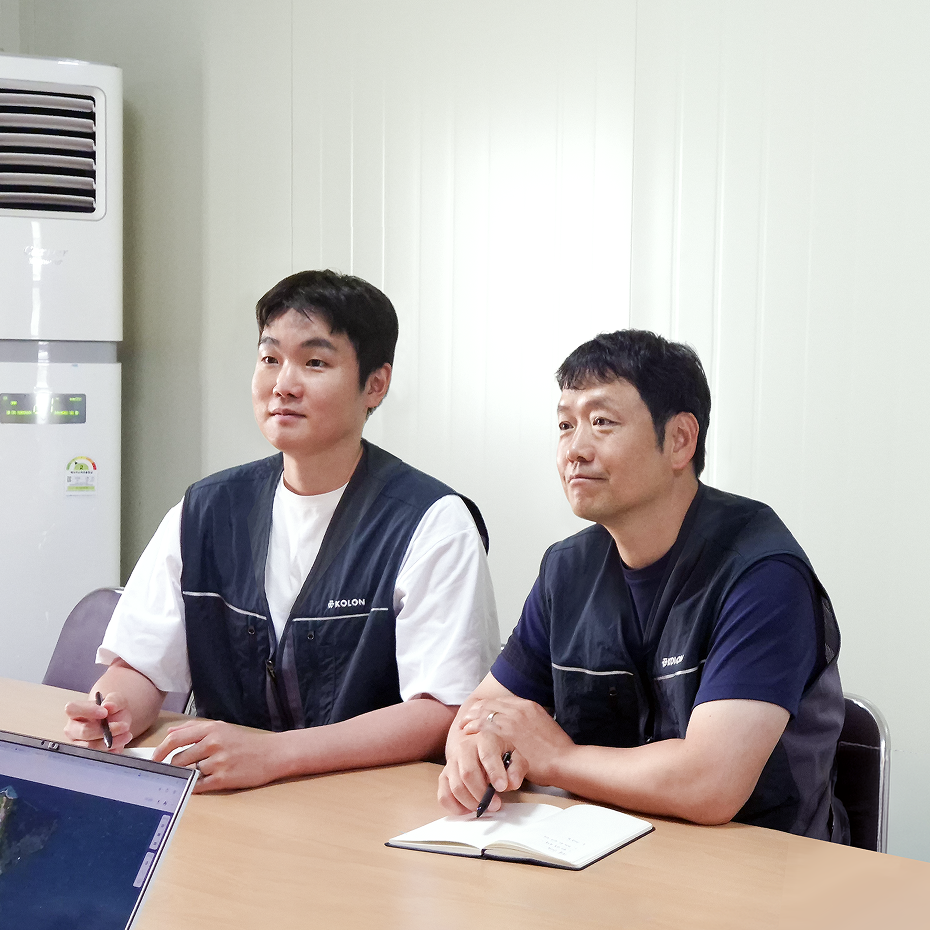
“At Xi C&A, we manage multi-channel data through an integrated platform.”
Industrial facilities generate vast amounts of data, including complex design data for mechanical equipment, construction data derived from those designs, and safety management data related to frequent heavy-material handling.
This is why Xi C&A adopted Meissa. When data is fragmented across multiple systems, both headquarters and site teams experience increased fatigue and reduced focus. By consolidating scattered data into a single integrated platform, clear and error-free communication becomes possible among multiple stakeholders, supporting accurate and timely decision-making. Speed and clarity are essential to project completion.
Learn how Meissa supported the site through an on-site interview at Xi C&A’s Ochang Energy Plant 2 Battery Production Building 2 project.
Field data gathered into one platform
Q. Please give us a brief introduction to the site.
💬 Son Yu-rak, Site Manager
We are currently responsible for the Ochang Energy Plant 2 Battery Production Building 2 project. It is a three-story facility with a total length of 395 meters, where secondary battery production facilities are being installed for various applications, ranging from automotive batteries to ESS.
It has been about eight months since we introduced the Meissa platform. We have actively used it for process planning and safety management, and we continue to manage various types of site data in an integrated manner.
Q. What Does Integrated Data Management Mean?
💬 Son Yu-rak, Site Manager
Production facility construction sites have two key characteristics. First, they involve dense and complex engineering technologies, facilities, and specialized personnel, requiring collaboration with multiple partners using diverse data such as orthophotos, BIM, and 3D scanning data. Second, since these facilities are built for operation, there is no fixed timeline—the faster the completion, the better.
To address both characteristics effectively, transparent communication based on accurate on-site data is essential. Because the equipment installed in production facilities is highly valuable, accuracy is critical. Fast, error-free communication is therefore extremely important, and Meissa provides strong support in enabling this process.

💬 Kim Sang-won, Deputy Field Manager
Currently, client meetings, weekly meetings, and daily process meetings are all conducted through Meissa. Since all relevant data is gathered on a single platform, issues such as discrepancies in site information or misunderstandings caused by communication based solely on 2D drawings have fundamentally disappeared. It has become much easier for all stakeholders to understand site changes in real time.
As collaboration efficiency has improved, meeting times have been reduced, work instructions have become clearer, and potential risks can be identified and addressed in advance, significantly reducing the likelihood of rework.
From the headquarters’ perspective, the vast amount of data generated at each site—such as design drawings, progress data, and quality control information—is now stored on a single platform instead of being scattered across multiple solutions. Even when headquarters staff visit sites, they can quickly understand site conditions simply by accessing Meissa. Monitoring project progress has become much easier, and when issues arise with partner companies, communication can be conducted based on objective data.

Error-Free Construction Based on Design
Q. How is Meissa used in the field?
💬 Kim Sang-won, Deputy Site Manager
At our site, Meissa is particularly useful for comparing design drawings with actual site conditions. It allows us to accurately verify whether construction aligns with the original design.
The generated 2D orthophotos provide reliable accuracy, enabling us to overlay design drawings directly on the imagery. Tasks that previously required on-site surveying equipment can now be completed by checking design overlays, making it much easier to verify locations such as pile positions or concrete pouring areas. This also applies to construction forecasting, such as identifying potential issues when installing steel structures in future stages.

💬 Lee Se-hoon, Smart Construction Team Manager
The use of BIM data has also become far more practical. Production facilities involve complex equipment such as machinery, pipelines, and storage tanks, where coordination between different systems is critical. While BIM design data is essential for reviewing potential clashes, it is difficult to rely solely on 2D drawings to verify actual construction conditions.
Previously, tools such as Autodesk Navisworks were required, which had to be installed on individual PCs, limiting their usability in the field. With Meissa, both RVT and IFC files can be uploaded directly to the platform. Once uploaded, all team members can access and review the data without additional downloads, allowing field workers to intuitively inspect construction status on-site using tablets.
Safety Management That Requires Preparation
Q. I heard that this site actively uses Meissa for safety management.
💬 Park Jun-beom, Safety and Health PL
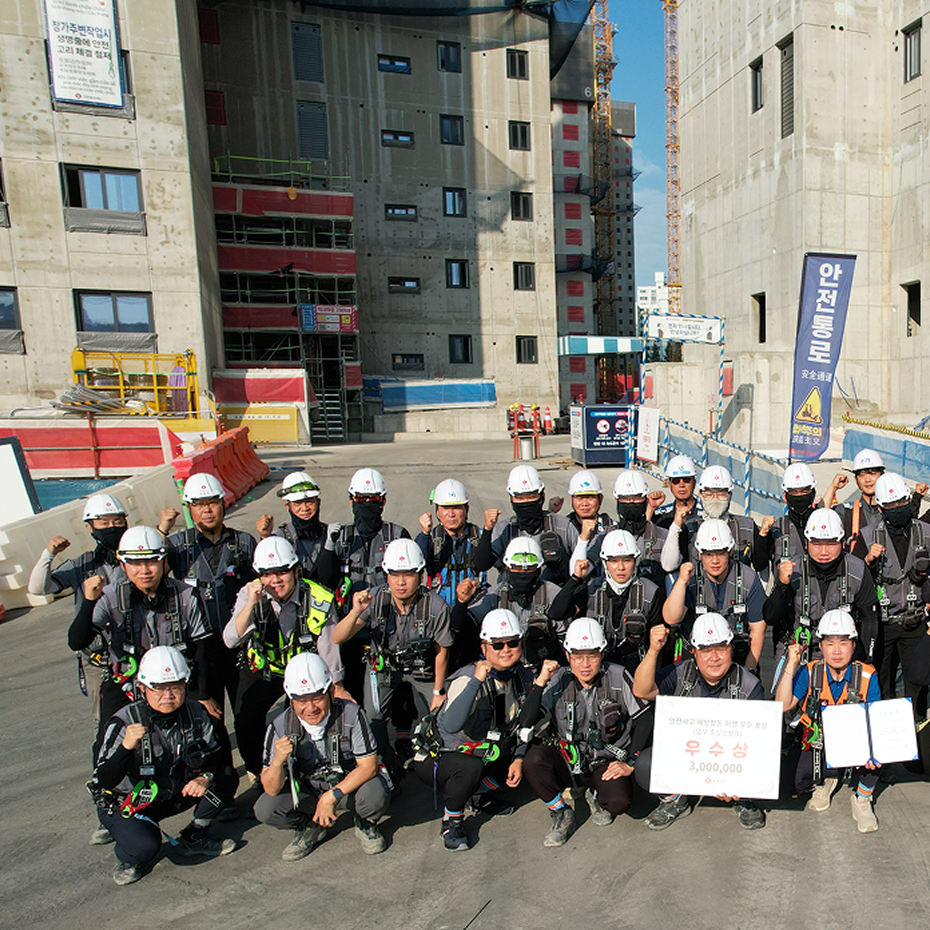
After introducing Meissa, establishing safety management plans became much simpler. We also actively use the worker and equipment tracking functions to enhance on-site safety.
Due to the nature of our site, there are limited openings, while work at height and heavy-material handling occur frequently. Narrow roads and the use of approximately 200 pieces of equipment increase the risk of congestion. By flying drones every morning for daily process meetings, we can clearly identify the locations of materials, heavy equipment, and work areas, allowing us to plan safety measures more effectively.

💬 Park Jun-beom, Safety and Health PL
The safety plans established using Meissa are shared on screens during morning toolbox meetings. Many field workers find it difficult to interpret floor plans, regardless of experience. However, when hazard zones and equipment movement plans are explained visually, understanding improves significantly. This approach has been particularly effective during signalman training.
Recently updated vehicle tracking functions allow us to receive daily reports via mobile messaging on equipment usage by partner companies. By accessing the platform, we can immediately understand the site situation, and we plan to continue using these functions actively.
Xi C&A and Meissa: smart construction of the future we are drawing together.
Q. What are your future plans with Meissa?
💬Lee Se-hoon, Smart Construction Team Manager
We would like to explore ways to utilize indoor data more effectively. Currently, Meissa’s 360-degree panorama function is used to document both new facility construction and the demolition of existing structures.
Given Xi C&A’s strengths in production facility projects, interior construction is particularly important. By further enhancing indoor data utilization, we believe it will be possible to monitor internal progress in real time and quickly identify potential issues. We look forward to continuing close collaboration with Meissa to develop features that provide real value in actual construction sites.